The White Snakes Here I Go Again
Some travelers may feel a picayune uneasy about the idea of encountering a snake on their vacation. However, well-nigh of the snakes in Colorado are harmless. Every bit a matter of fact, of the virtually 30 species of snakes calling Colorado "home", simply rattlesnakes are venomous.
Regardless of their ability to seize with teeth or not, all snakes would prefer to be left lonely to enjoy soaking upwards the warm sunshine rather than worry about what y'all're up to. Withal it'due south still a expert idea to know which of our reptilian neighbors to be wary of so that you tin can ensure your rubber while exploring the wilderness of Colorado.
Despite their somewhat scary looks and "bad" reputation, snakes are really more interested in small prey like rodents, insects, frogs, worms and lizards. Even the ones considered dangerous to humans are more probable to slither away from you if given the chance and typically just strike when feeling threatened or startled.
We list some of the near common snakes found in the Centennial Land and give you an idea of when and where to expect to see them. In that location'due south no need to be scared of the prospect of seeing a snake on your Colorado adventures, though. However, it's always a practiced idea to proceed your optics peeled for Colorado wild animals.
Poisonous Species – Venomous Snakes in Colorado
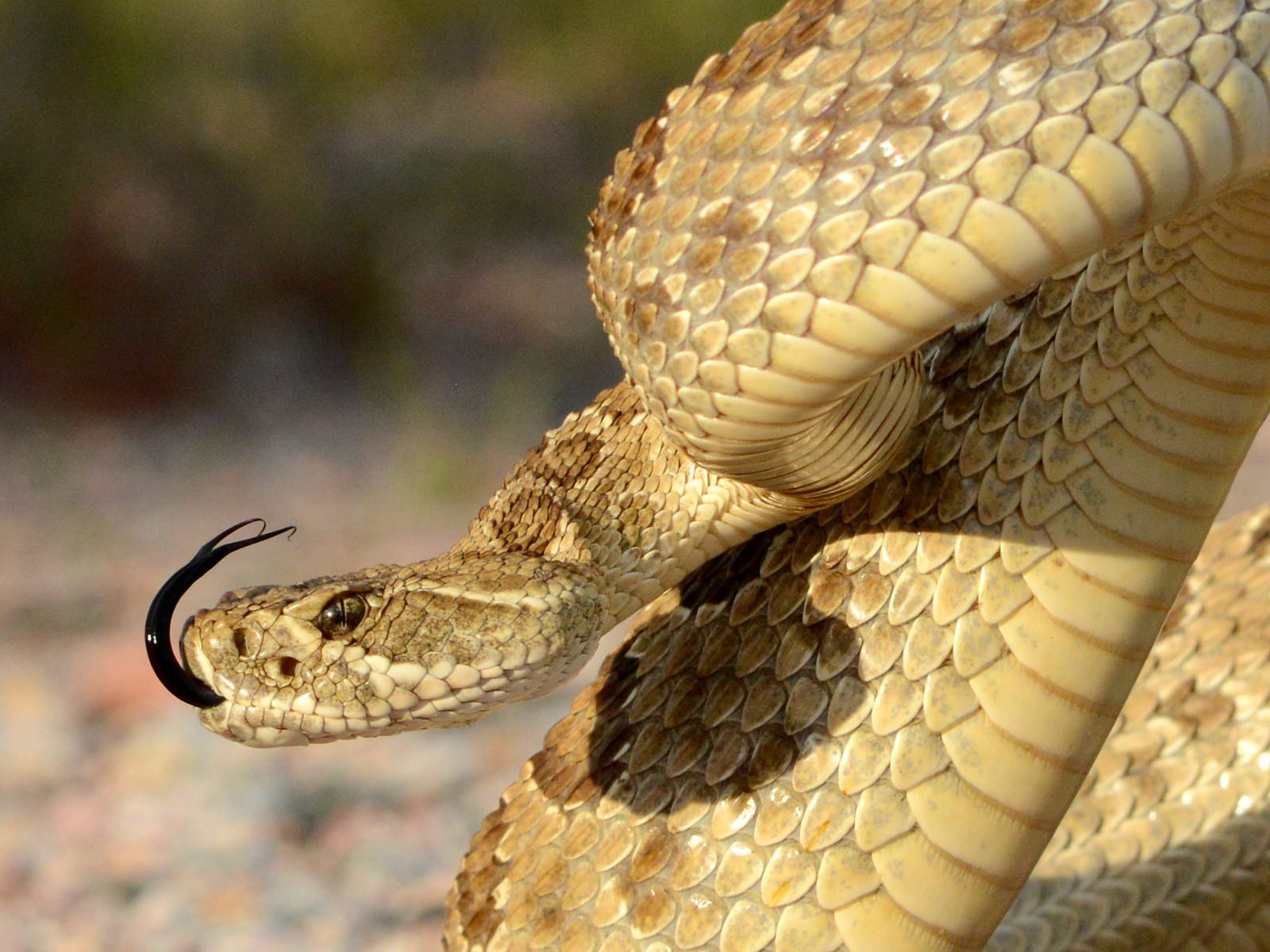
Equally mentioned, the but dangerous species of snakes in Colorado for yous to be specially cautious of are the rattlesnakes.
Rattlesnakes
The expert news is that they take singled-out features that will help you identify them.
- They have rattles at the end of their tails.
- You may run into 2 upper fangs (in addition to the residue of their teeth).
- They accept broad, triangular heads accentuated by their narrow necks.
- Their pupils are vertical and elliptical. (Nonvenomous snakes have round pupils.)
- They take facial pits between the nostrils and eyes.
- Venomous snakes have a single row of scales betwixt the vent and the tips of their tails. (Nonvenomous snakes have ii rows of scales.)
Also knowing how to identify these snakes, it'due south also helpful to know what to do when you lot're in areas that are known for hosting them. Armed with a petty extra knowledge helps you avoid an come across and handle i appropriately if it does occur.
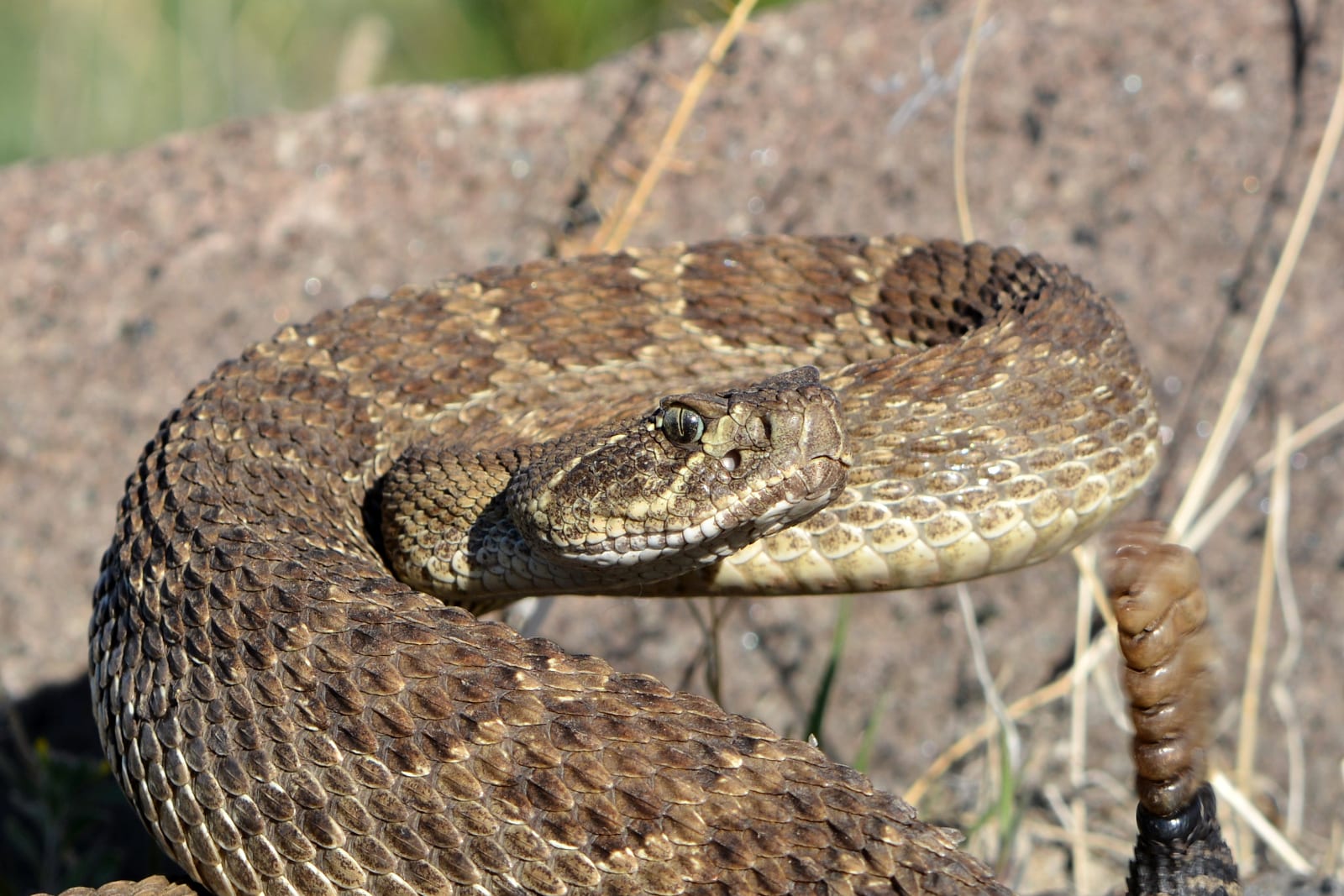
Here are a few tips to follow for additional rubber measures:
Look Ahead – Whether at that place are signs posted to caution you to be on the lookout man for snakes or not, it'southward wise to ever expect several yards in front of you, not but where you're stepping. Snakes ofttimes alloy into their environment, so they won't exist easy to spot. However, y'all can lookout for night, oval patterns on the trail that you're hiking. Keep in listen that sometimes snakes volition be stretched out "sunning", so be sure to stay alert and pay close attention to your environs.
Keep Your Distance – If you practise run into a rattlesnake, requite it enough of room. They don't accept external ears so they are particularly sensitive to vibrations. They will feel your footsteps equally you arroyo, which is when they will become on-guard and probable coil up. You tin can as well utilize a long stick or pole to sweep grassy areas before entering. Avoid jumping over logs, turning over rocks or putting your hands in rock crevices without first checking carefully for snakes.
By keeping your distance, you minimize a serpent's power to reach you, regardless of its intentions to strike or not. That'southward considering a rattler can only strike within half its length. Don't take any risks, though! It tin be hard to run into how long a ophidian is when it is coiled upward.
Stay Calm – Quick movements can startle a snake, so if you lot practise see one, it's all-time to suspension and remind yourself that rattlesnakes aren't interested in attacking humans. Nosotros're too big for them to eat, so they see u.s. as the danger. The best class of action is to back away from the expanse the ophidian is in and either go around or alter your route altogether. Give the serpent plenty of room and it volition leave you lonely.
What to Do if Bitten – It'south possible that the bite is dry out and non-venomous, as is the case in about 25% of all rattlesnake bites. Merely don't take whatever chances by ignoring a seize with teeth! Stay equally calm as possible and seek medical attending immediately. Here are some dos and don'ts while awaiting medical treatment.
- Don't try to suck out the venom. The human mouth is full of bacteria that can cause infection, which would brand treatment more than complicated.
- Don't cut the wounded area considering that tin cause considerable bleeding.
- Don't raise the affected area above your chest as that will let the venom to reach your heart more speedily.
- Don't wash the wound. Venom from your skin may be used to identify the correct anti-venom more easily.
- Do remove whatever tight habiliment or jewelry before swelling begins.
- Do remain as still as possible to minimize your blood flow and slow the circulation of the venom.
- Practice let the wound bleed every bit it may allow some of the venom to exist released.
- Do remain as calm equally possible to go along your center rate down and to ho-hum the spread of the venom.
For snake bite symptoms and additional treatments, visit Healthline's article "Rattlesnake Bite".
Non Venomous Snakes in Colorado
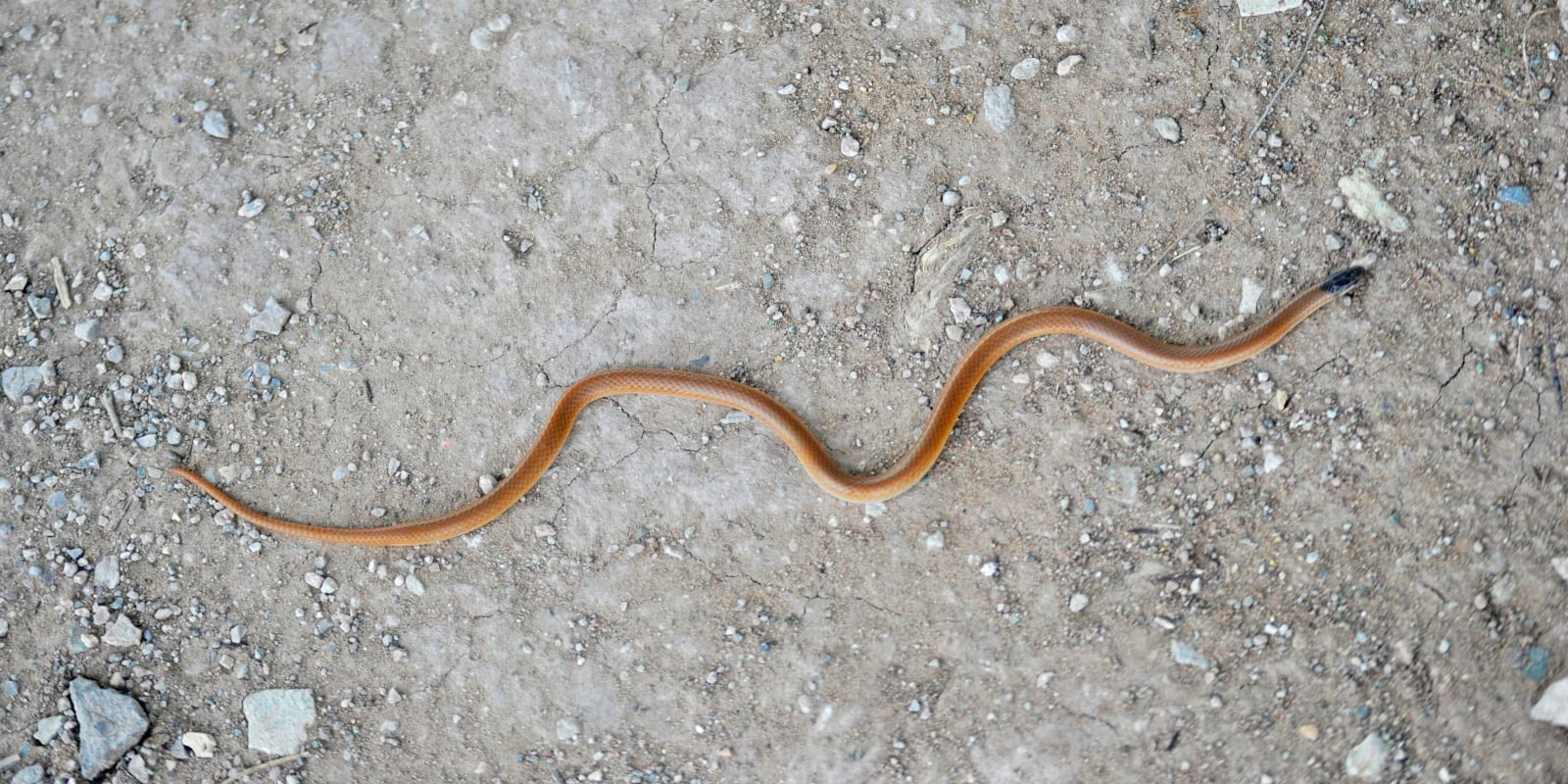
Now that we've covered the ones you should be cautious about, let's look at some of the other common snakes of Colorado. If you spot a serpent that does not have a rattle in its tail, you have zilch to fear. Information technology is yet wise and respectful to get out it be, though.
Most snakes are ectothermic, meaning they are common cold-blooded and regulate their body temperature using external sources. This makes them avoid extreme temperatures and brings them out to practice their hunting in milder weather. Their forked tongues and heat-sensitive facial pits help them make up one's mind what is around them.
So go along all of this in mind when planning your outings, every bit it could help you avoid times and places that may be more than prone to serpent visitors.
Western Yellow-Bellied Racer
The Western Xanthous-Bellied Racer is found in many of the Western States, including Colorado, Utah, New Mexico, Oregon, and Nevada. Its most recognizable characteristic is its polish scales, ordinarily in a blueish-grey or dark-brown colour with a yellow or cream underside.
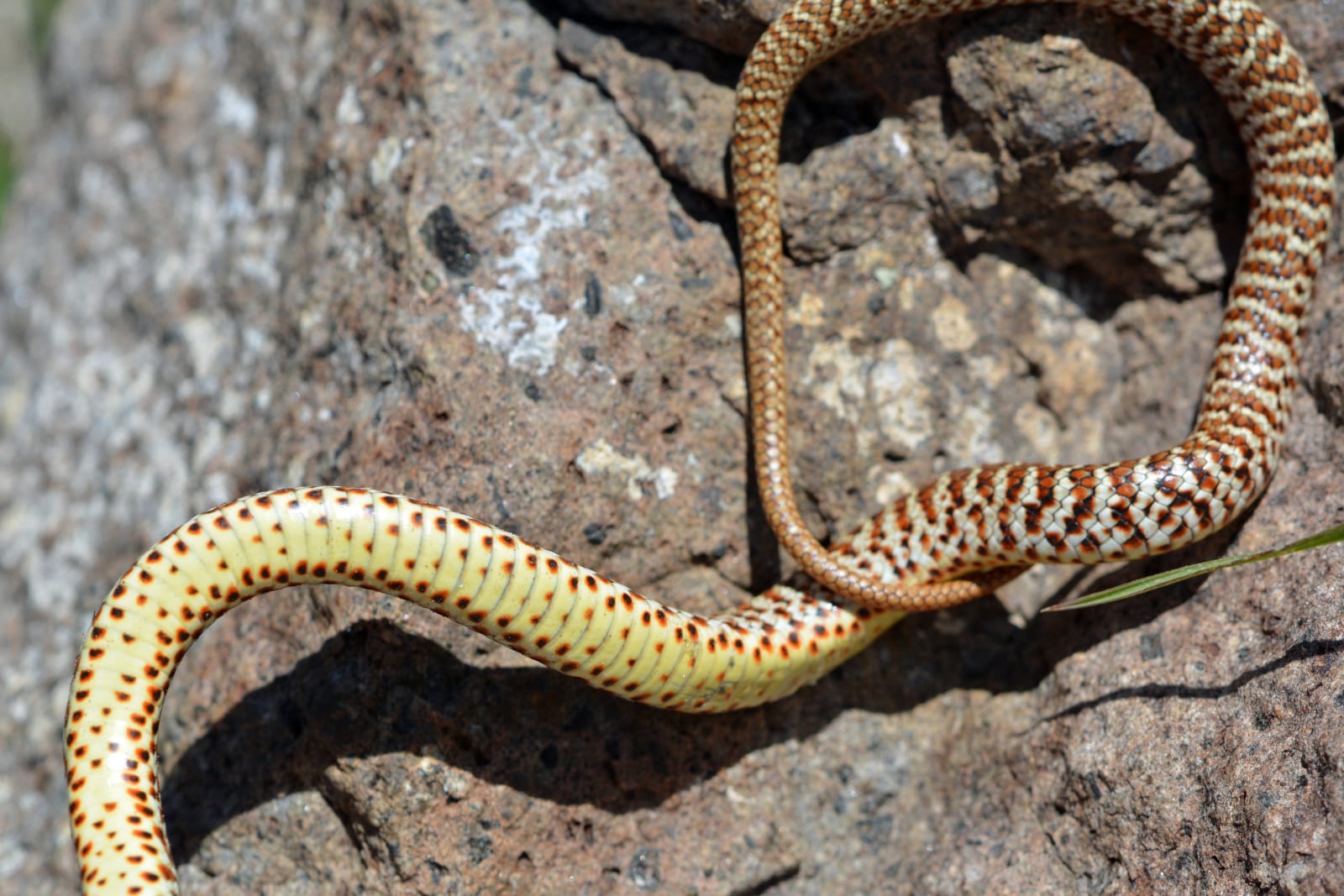
It likes to eat birds, eggs, lizards, small mammals, turtles, large insects and other snakes. You're nearly likely to meet these snakes in areas with plenty of sunshine such as grasslands, forest openings, meadows, and high in the mountains.
Great Basin Gopher Snake
Establish throughout the Western Gradient of Colorado, the Great Basin Gopher Snake inhabits a variety of areas from dry sandy spaces to pine woodlands. These snakes are straw-colored or stake dark-brown with a row of large foursquare patches of reddish brown and black on their backs also as similar pocket-size patches on their sides. Their underside is a cream color which also has pocket-sized blotches.
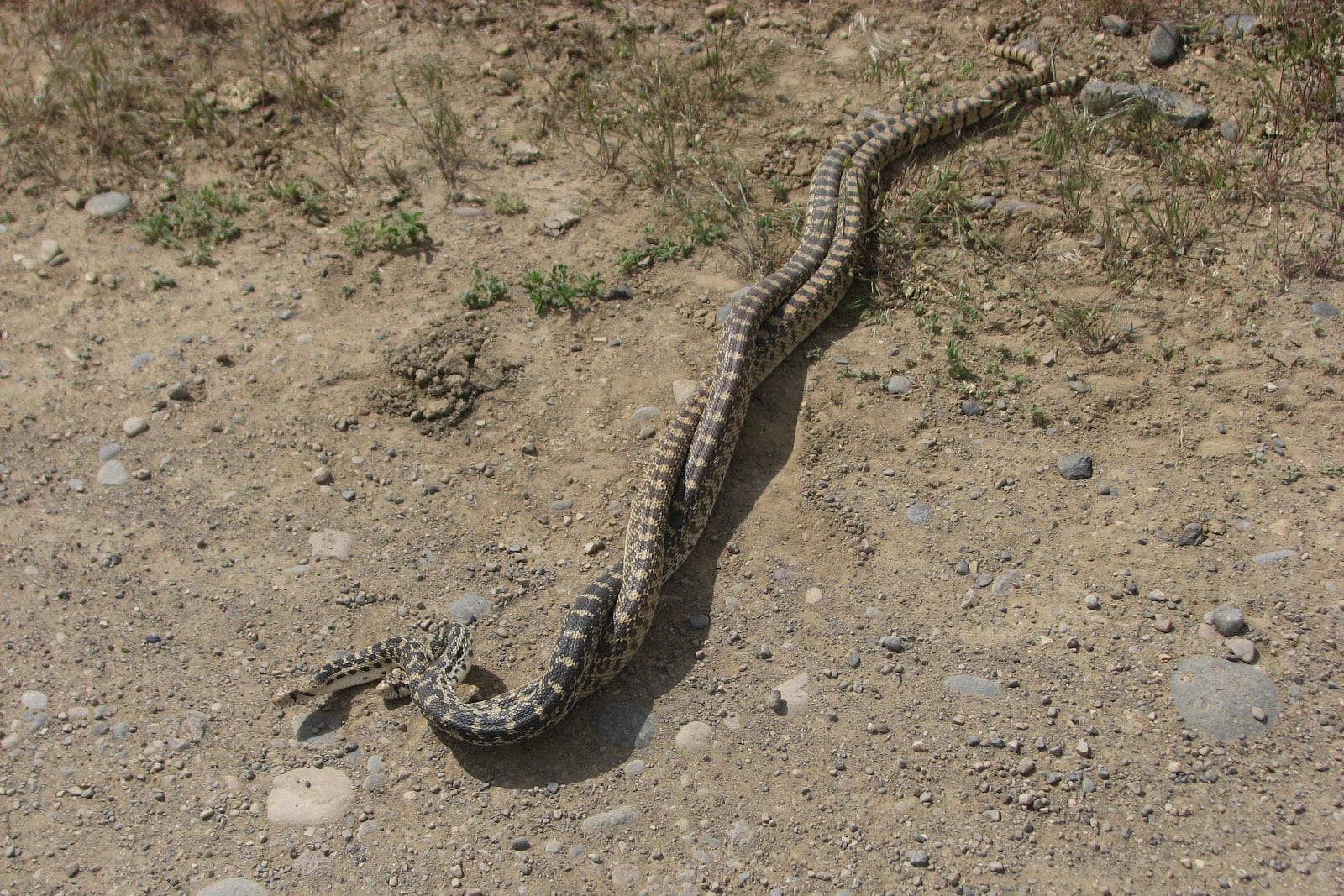
It'southward choice of defence is to scare away predators with a tearing hissing audio. It may also mimic a rattlesnake by vibrating its tail chop-chop. Despite its attempts to seem dangerous, humans have nothing to worry almost with this species.They feed on minor mammals, lizards, insects, birds and eggs.
Blackneck Garter Ophidian
These snakes have an olive-grey or dark olive-chocolate-brown coloring with a yellowish or orange stripe on their backs and white stripes on their sides. During the daytime, they hunt for amphibians, frogs, tadpoles, worms, and some types of fish. With a nutrition similar that, you may have guessed that the Blackneck Garter Snake is semi-aquatic and can often be found slithering effectually ponds and streams.
An interesting fact about this ophidian is that it can release a foul-smelling scent from its anal glands when handled—all the more reason to leave it alone!
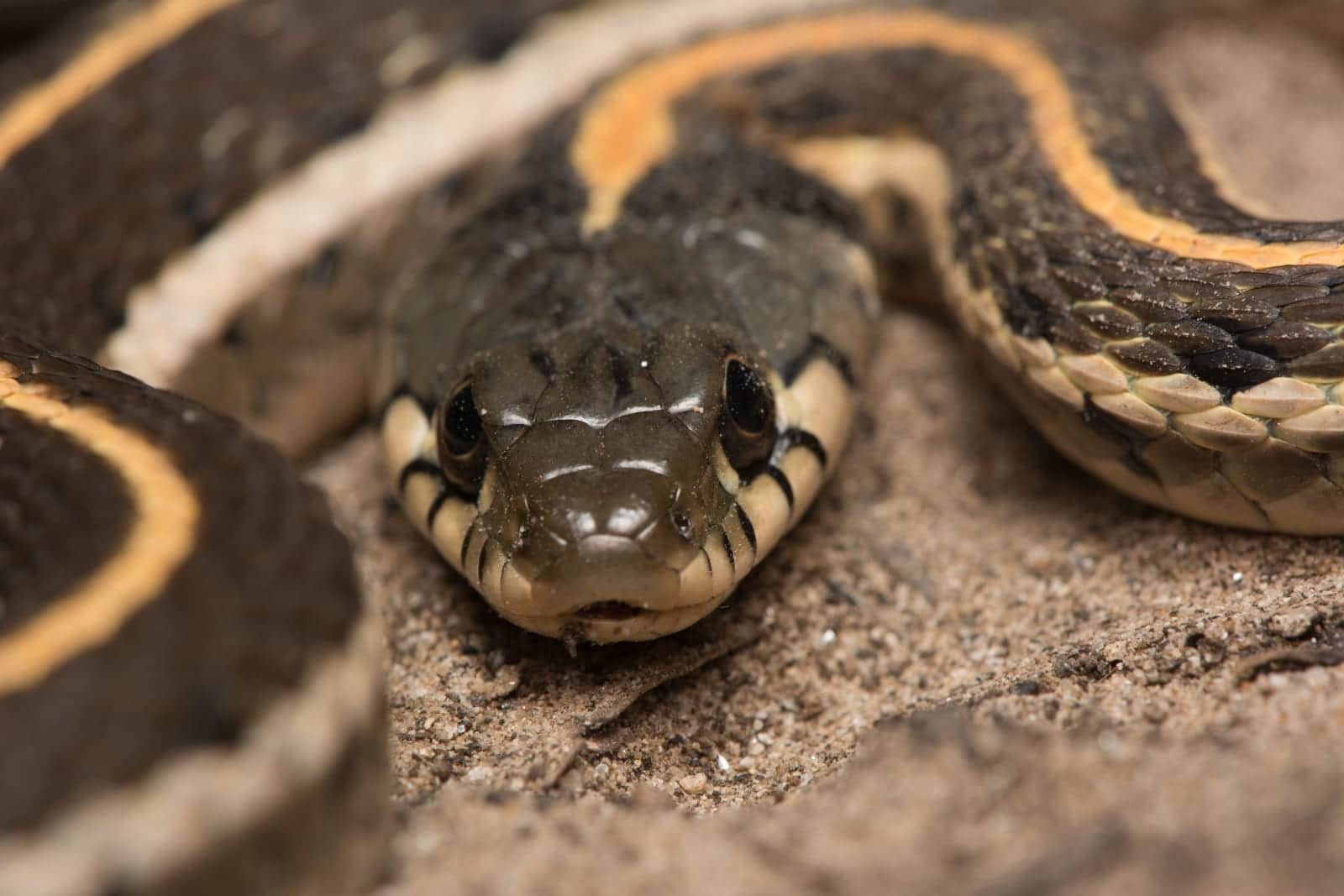
Although they don't usually use their teeth when they bite, they do have toxins in their saliva. So if y'all are bitten past one, yous could accept a mild reaction, but ultimately, Blackneck Garter Snakes are not a menace to humans.
Colorado Bullsnake
As one of the largest and most often seen snakes in Colorado, the Bullsnake can be a daunting snake to come beyond. Still, they are admittedly no threat to humans. They are non venomous but may still strike if threatened. They have also adapted the scare tactic of vibrating their tail when threatened, much similar a rattlesnake, but it'southward but for self-protection.
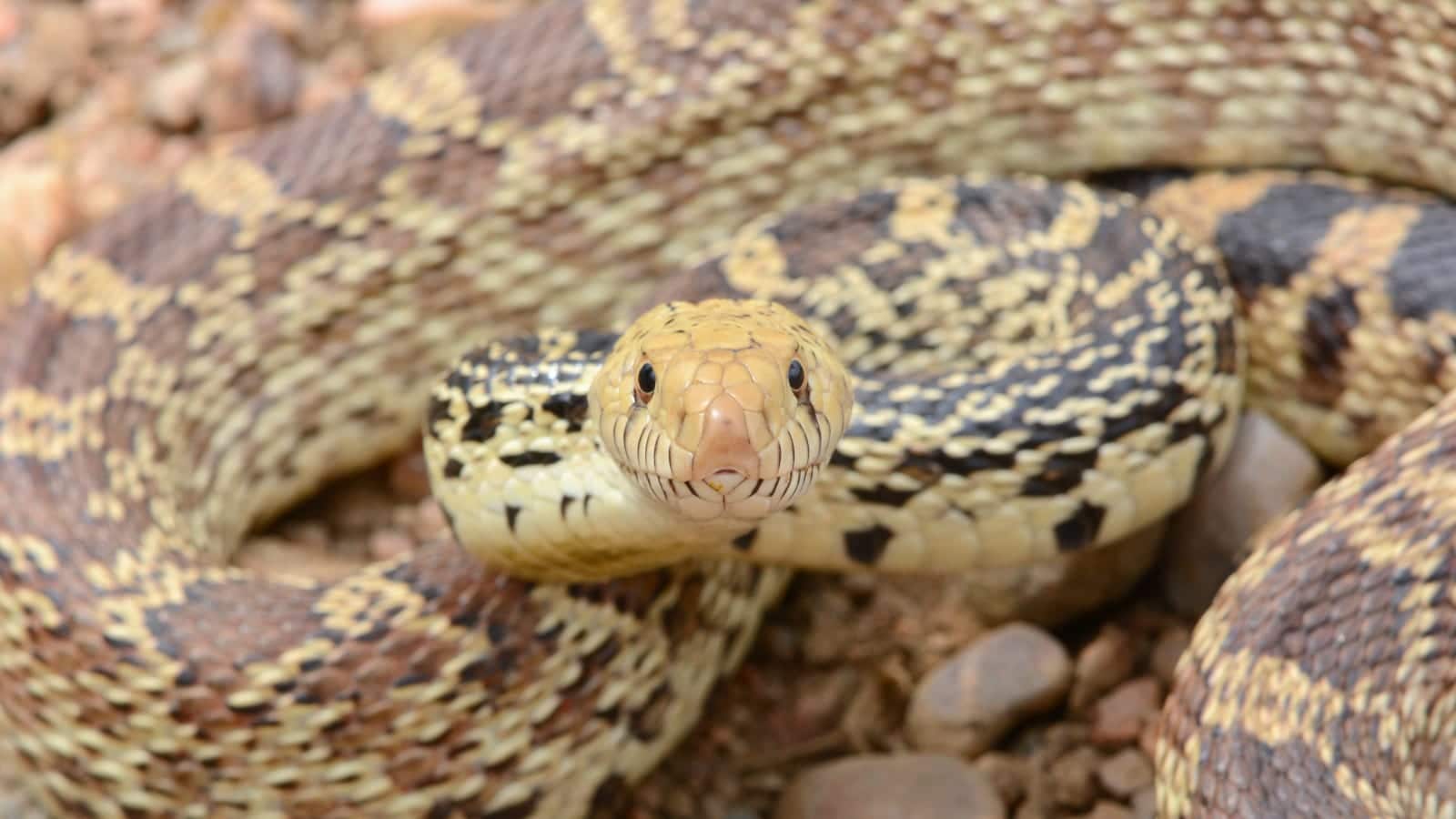
They are usually found in open areas such as grasslands, prairies and meadows. Developed bullsnakes average 4-6 feet in length and help command the rodent population with their diet of mice, rats, ground squirrels and rabbits. If you see one of these yellowish-brown snakes, just give it fourth dimension to get out of your way—it's not interested in bothering yous.
Exploring Colorado'southward Nature
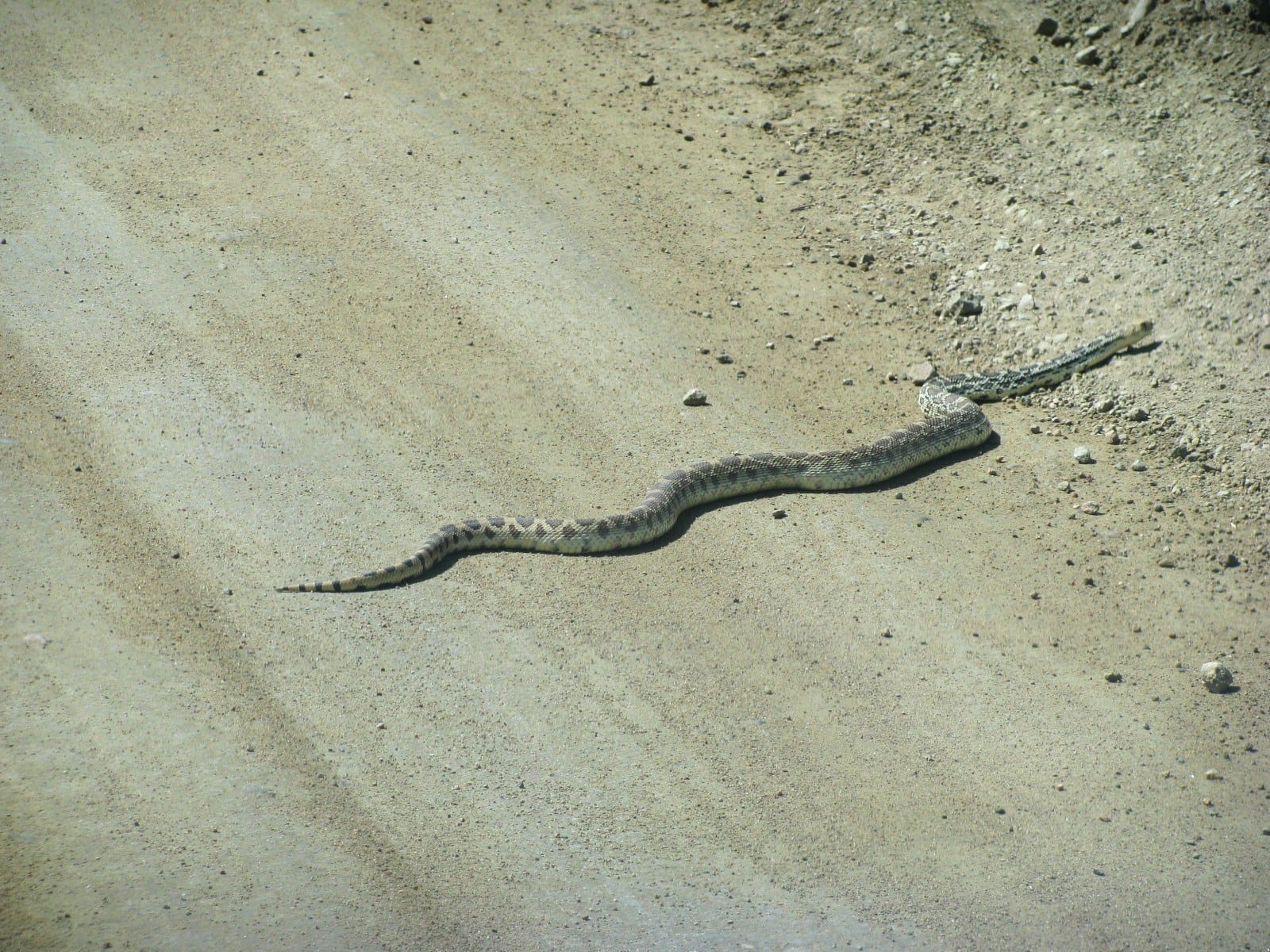
Snakes are part of Colorado'due south natural surroundings. They live hither and play their role in the ecosystem without whatever plans to hurt united states of america humans, and then there'due south no need to exist frightened to go outside while you lot're visiting this beautiful state. Y'all're armed with cognition, you know what to look out for, and you're aware that nearly all Colorado snakes are harmless. It'southward fourth dimension to relish the great outdoors with all of its tracks, trails, mountains, lakes, rivers and forests!
Be sure to check out other articles on our weblog for more than tips on where to explore, swallow, or stay in Colorado. We hope you accept a fantastic visit, (snakes and all)!
Source: https://www.uncovercolorado.com/snakes-common-species-in-colorado/
0 Response to "The White Snakes Here I Go Again"
Post a Comment